Thu, 26.11.2026, 01:00 – Sat, 27.06.2026, 02:00
Kino Arsenal
Gerichtstraße 53, 13347 Berlin
Filmprogramm at Kino Arsenal
Film series: feminist migrant queer | legacies presents futures
60 Years of DFFB: For the anniversary, a film series explores the connections between the academy’s past and present. Three spotlights – feminist, migrant, queer – fall on perspectives that still have to fight for visibility: women who campaigned for equality, students with migrant and international biographies, and a queer cinema that is renegotiating its own term.
Thu Nov 26, 8:00 pm — Queer Peripheries
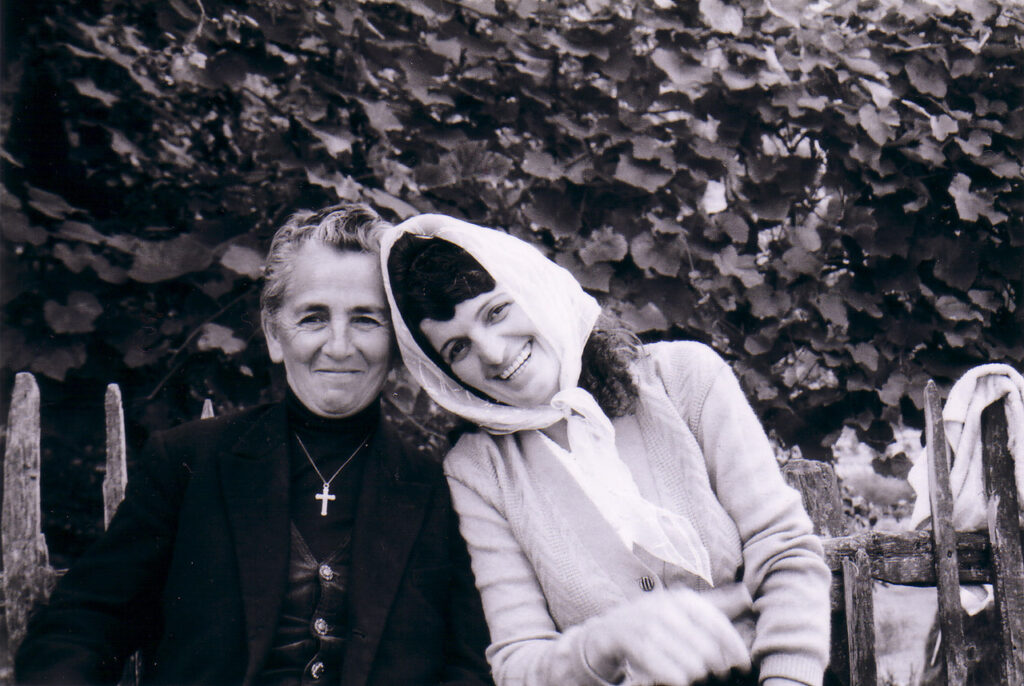
The fighter jets from Cristina Perincioli’s experimental short Nichts (Nothing) fly into the forest and into the wartime romance of Heldinnen der Liebe (Heroines of Love) by Nathalie Percillier and Lily Besilly, in which two lesbian officers escape a world war staged as a silent-film comedy by leaping through time to the Brandenburg Gate. In Pashke und Sofia (Pashke and Sofia), Karin Michalski uses long takes and intimate interviews to capture transmasculine ways of life in rural Albania, and on a Bavarian hunting stand Christoph finally tries to tell his mother about his boyfriend in In den Binsen (Rushes) by Clara Zoë My-Linh von Arnim. Till Kleinert’s Cowboy ultimately blurs the line between hunter and hunted through the genre of horror — a real estate agent who scouts the countryside for new investment properties gets seduced and drawn into a dangerous game.
Nichts
(Nothing)
Director: Cristina Perincioli · West Germany 1968 · digital · 2 min · no dialogue
Heldinnen der Liebe
(Heroines of Love)
Directors: Nathalie Percillier, Lily Besilly · Germany 1996 · 16mm · 10 min · German with English subtitles
Pashke und Sofia
(Pashke and Sofia)
Director: Karin Michalski · Germany 2003 · DCP · 28 min · Albanian with English subtitles
In den Binsen
(Rushes)
Director: Clara Zoë My-Linh von Arnim · Germany 2020 · DCP · 6 min · German with English subtitles
Cowboy
Director: Till Kleinert · Germany 2008 · 35mm · 32 min · German with English subtitles
Preceded by:
Überwachungskamera (Security Camera)
Director: Christoph Heller · Germany 2006 · 35mm · 1 min · no dialogue
Curated by Toby Ashraf and Sophie Holzberger
Guests: Nathalie Percillier, Lily Besilly, Karin Michalski, Clara Zoë My-Linh von Arnim, Till Kleinert, Christoph Heller, and others
Fri Nov 27, 5:00 pm — Paths Crossing
The three filmmakers in this program were born between 1950 and 1953 and came to Germany in the early 1970s. Their very different graduation films, on which they worked for one another, were made in 1984 and 1985. They are records of a complex perception of the world, enriched by biography, and they belong to the many treasures in the DFFB archive that have gone largely unnoticed. Sophie Kotanyi, a trained dancer, was active in West Berlin’s independent theater scene and worked as a theater educator before enrolling at the DFFB in 1974. Irén Biró had lived with her parents in political asylum in Switzerland and worked as a photo lab technician in Frankfurt am Main before applying successfully to the DFFB in 1976. At the entrance exam she met Chantal Laventure, who after a childhood and youth in the south of France had already spent several years traveling through Europe — working among other things as an intern at Leica in Weilburg, then in Berlin as a kitchen help, a cleaner, and a driver. The DFFB placed importance on applicants bringing a certain degree of life experience with them — these women had it.
Transit
A film by Irén Biró
West Germany 1985 · 16mm · 20 min · German · no subtitles
The images of this film emerge from the radical subjectivity of a body strapped to a hospital bed. The camera’s eye scans the strange, narrowed field of vision, finding the window again and again — and through it, a way into memories of earlier people and other places. The soundtrack goes its own way. The occasion and starting point for Irén Biró’s graduation film was a devastating bicycle accident that left her with permanent injuries and later forced her to give up the calling she had discovered for herself: working as a camerawoman.
Schwarz-Weiß Malerei
(Black-and-White Painting)
Director: Sophie Kotanyi · Cinematography: Ulrike Isenberg, Irén Biró, Tamara Wyss · Sound: Uli Fronmeyer, Sophie Kotanyi
West Germany 1984 · 16mm · 38 min · [language version tbc]
In her graduation film, Sophie Kotanyi portrays a Cape Verdean woman who has married a German man and lives with him in West Berlin. Teresa’s daily life is a negotiation between the advantages and disadvantages of her new life of material comfort and the worry that from now on she will be welcome neither here nor there. Her routes through the city and her observations, which accompany the film as voiceover, trace a personal path. The film opens up the context in which Sophie Kotanyi’s own working life would continue to unfold: as a documentary filmmaker, educator, and project director in post-colonial societies, above all in the former Portuguese colonies.
Fuge Staccato
(Staccato Fugue)
Concept, cinematography, editing: Chantal Laventure · Sound: Irén Biró · Mix: Werner Günther · Negative cutting: Barbara Kupferer · Production management: Joachim Rothe, Joanna Störkmann · Text by Antonio Hernando, spoken by Telma Savietto
West Germany 1984/85 · 16mm · 40 min · [language version tbc]
West Berlin in the weeks around the turn of the year 1983/84. The season of short days and long shadows, out of which step people you have never seen quite like this. Somewhere it is Christmas, and the New Year’s Eve furlough looks like a rehearsal for revolt. One would have to call Chantal Laventure’s high-contrast portrait of this city, which did not make things easy for her, a symphony. If only the word weren’t so worn out. And nothing in this film is worn out — every shot a lived moment of great photographic beauty.
Curated by Karina Griffith and Tobias Hering
Guests: Sophie Kotanyi, Chantal Laventure
Fri Nov 27, 8:30 pm — Speculation / Mobilization
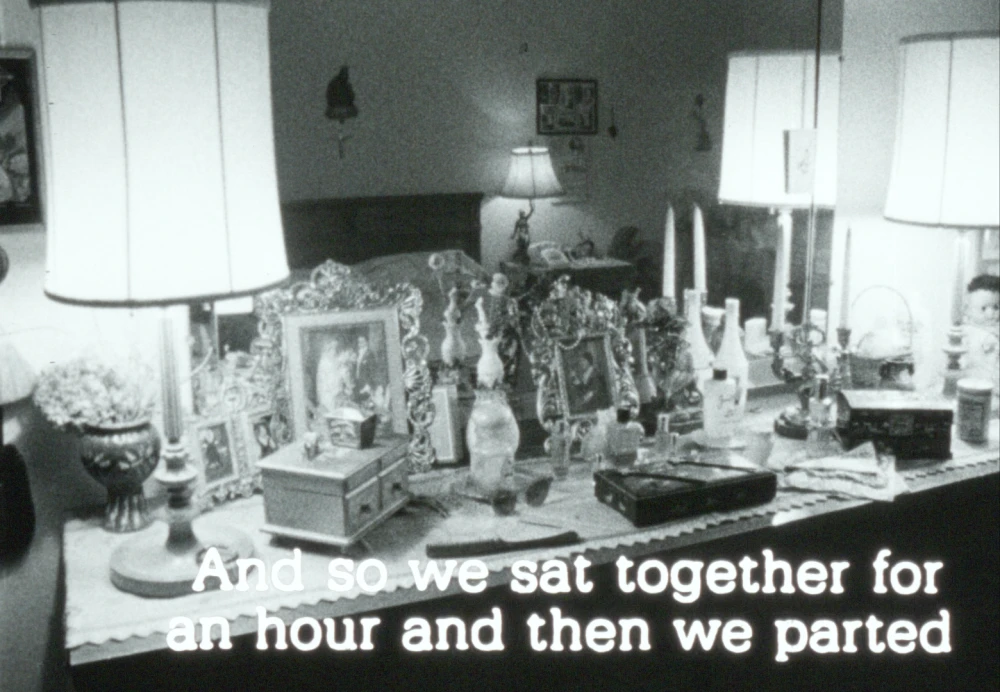
This program presents two archival discoveries from the 1980s: twelve years before Cheryl Dunye’s legendary mockumentary The Watermelon Woman, the largely unknown film Lucy (1984) narrates lesbian history in the form of a speculative documentary. Searching for her aunt Lucy, filmmaker Vérénice (Verena) Rudolph explores New York and its inhabitants in 1984. The black-and-white images of the Bolex make the city shimmer at night, while intimate portrait sequences of longtime companions evoke longings and memories of a beloved person. Karsten Witte called it “the most beautiful film I have seen in a long time”; Alexander Kluge thought of it as “a great film.” Vérénice Rudolph also worked as an actress for Kluge. In this film series she can also be seen in Maria Lang’s Zärtlichkeiten (Tendernesses, 1985). Weibliche Zone (1986), by contrast, is part of the history of political documentary filmmaking at the DFFB, bringing activists and women physicians together to interrogate the state of gynecology and reproductive technology in Germany. It was shot over four days, yet only a fraction of the conversations can be heard in the film. Between shots of medical instruments resembling something out of science fiction the film features speakers including Silvia Kontos. The sociologist questions male dominance in medicine on a theoretical level and predicts alarming developments. Director Gerda Grossmann was active in the women’s movement and founded, among other initiatives, the Hydra counseling center for sex workers. At the time, the film contributed to changing practices in obstetric care.
Lucy
Director: Vérénice (formerly Verena) Rudolph · West Germany 1984 · 16mm · 45 min · German, English · no subtitles
Weibliche Zone
(Female Zone)
Director: Gerda Grossmann · West Germany 1986 · 16mm · 41 min · German · no subtitles
Curated by Fiona Berg, Sophie Holzberger and Arisa Purkpong
Guests: Vérénice Rudolph, Gerda Grossmann