Thu, 29.10.2026, 01:00 – Fri, 30.10.2026, 01:00
Sinema Transtopia
Lindower Str. 20/22/Haus C, 13347 Berlin
Filmprogramme at Sinema Transtopia
Film series: feminist migrant queer | legacies presents futures
60 Years of DFFB: For the anniversary, a film series explores the connections between the academy’s past and present. Three spotlights – feminist, migrant, queer – fall on perspectives that still have to fight for visibility: women who campaigned for equality, students with migrant and international biographies, and a queer cinema that is renegotiating its own term.
Thu Oct 29, 8:00 pm — Terms of Encounter
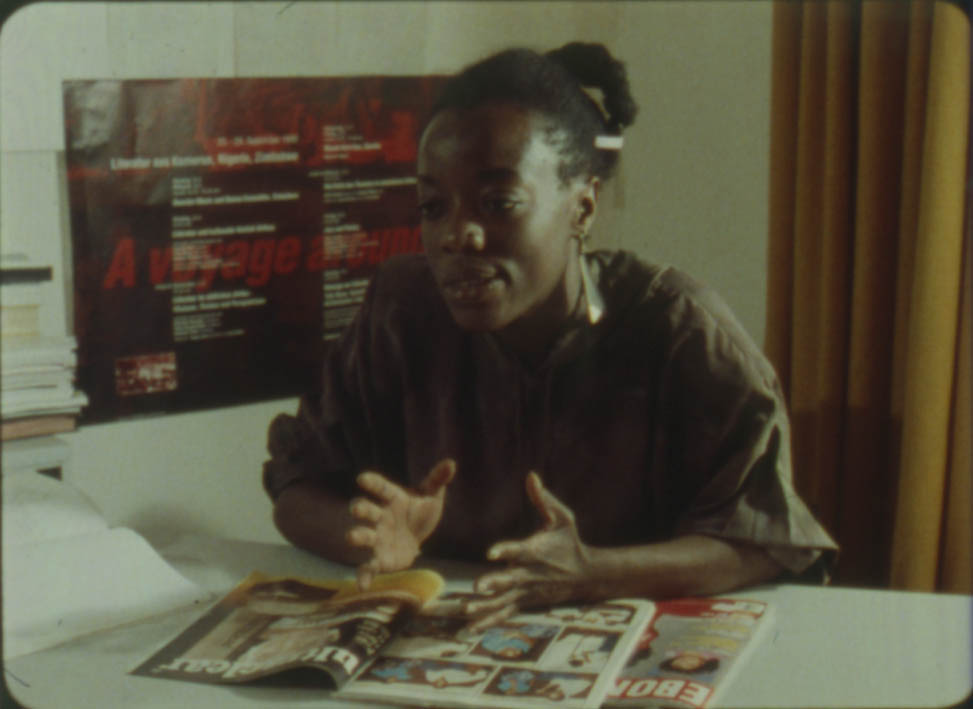
Terms of Encounter revisits an intersectional program on “migrant presents” at the DFFB and imagines how it might be tied to unwritten Black perspectives in Germany, past and future. The film collective Blickpilotin e.V. (Kathrin Schulz, Regina Holzkamp née Schütze, Maria Schmidt, Stefanie Hetze and Madeleine Bernstorff) was founded in 1989 to promote and program feminist art house cinema. In 1998, Schütze and Beate Spille organized a screening of films directed in Germany by women stemming from Kenya and Zimbabwe who were studying at the DFFB, under the title “Begegnungen mit afrikanischen Regisseurinnen (Encounters with African Women Directors).” The program took place at Emitaay (formerly K.O.B.), a squatted house and cultural space on Potsdamer Straße in Berlin-Schöneberg, and featured student and independent works by Wanjiru Kinyanjui, Tsitsi Dangarembga and Auma Obama, with a keynote from Marie-Hélène Gutberlet. Terms of Encounter reframes the historic program with a performance by Mmakgosi Kgabi that introduces Griffith and Hering’s early research into the films of Monalisa A.J. Godeffroy, a film student from Swaziland (today Eswatini) who enrolled at the DFFB in 1977. With special thanks to Birgit Kohler, Branwen Okpako, Michael Meert, Don Edkins and Priscilla Layne.
Performance: Mmakgosi Kgabi
approx. 10 min
Black in the Western World
Director: Wanjiru Kinyanjui · Cinematography: Beatrix Deller, Elke Götz · Cast: Paul Ford, Tsitsi Dangarembga, Natalie Asfaha, Sheya Felix Kaluapa
Germany 1992 · 16mm · 23 min · German, English · no subtitles
At the start of the 1990s, Kenyan DFFB student Wanjiru Kinyanjui grappled with how it felt to be Black in Germany. Racist material from German everyday culture rubs up against conversations with other Black people in Europe. — Source: Berlinale, Fiktionsbescheinigung
Die Schönheitsverschwörung
(The Beauty Conspiracy)
Director: Tsitsi Dangarembga · Cinematography: Rainer März
Germany 1994 · digital · 12 min · German, English · German subtitles (for the English parts)
Tsitsi Dangarembga’s documentary-ethnographic video Die Schönheitsverschwörung (The Beauty Conspiracy) examines an Afro beauty shop on Kantstraße in Berlin with ironic emphasis. Customers recount their experiences in post-reunification Berlin and, as it were, provide a brief primer on the merchandise: hair straighteners and skin-bleaching creams. The social effects of majoritarian notions of beauty become evident in a variety of ways. — Source: Filmmuseum Potsdam
All That Glitters
Director: Auma Obama · Cinematography: Menga Huonder-Jenny · Cast: Barphe Enow, Sandy Bacher, Cyrill Berndt
Germany 1993 · 16mm · 21 min · English · no subtitles
It is the early 1990s, and Wendo (Barphe Enow) watches a television news report describing the far-right attacks in Germany resulting in the fatalities of Amadeu Antonio, Jorge João Gomondai, Mahmud Azhar, among others, and the xenophobic arson attacks in Solingen. She and her child, Achieng (Sandy Bacher), trust a helpful stranger (Cyrill Berndt) in the park who implicates himself into their lives.
Curated by Karina Griffith and Tobias Hering
Guest: Mmakgosi Kgabi
Fri Oct 30, 6:00 pm — Breaking the Waves
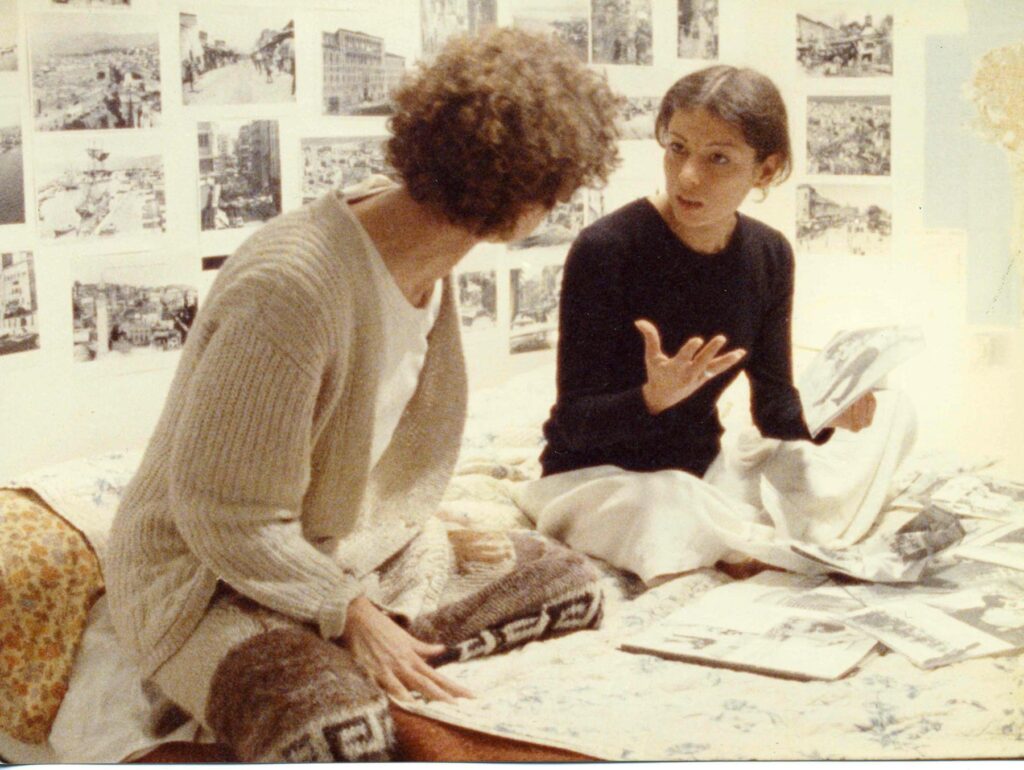
Wie das Meer und seine Wogen (Like the Sea and Its Waves, 1980) is the second part of a trilogy that Edna Politi began at the DFFB – a cinematic negotiation of the conflict between Palestine and Israel. In the documentary Für die Palästinenser – eine Israelin berichtet (For the Palestinians: An Israeli Woman Reports, 1974), the Lebanese-born Jewish filmmaker shows the situation of the Palestinian population and its oppression and exploitation by Israeli society. The final part, Anou Banou oder Die Töchter der Utopie (Anou Banou or the Daughters of Utopia, 1983), interrogates the role of women within the kibbutz movement and the founding of the State of Israel. Wie das Meer und seine Wogen, likewise produced with Das kleine Fernsehspiel, is the only fiction film in the series. The political conflict is explored through the relationship between two women who went to school together in Lebanon and reunite in exile in Paris. Eva, a Jew, went to Jerusalem; Samia, a Muslim, remained in Beirut. Edna Politi studied at the DFFB from 1971 to 1975, but her graduation film was not completed until 1980. The screening is the German premiere of the restored version. The film demonstrates how the keywords of the anniversary program — feminist, migrant, queer — are interwoven with one another, and it also makes painfully clear who is able to return.
Wie das Meer und seine Wogen
(Like the Sea and Its Waves)
Director: Edna Politi · West Germany 1980 · DCP · 93 min · French, Hebrew, Arabic with German subtitles
Curated by Fiona Berg, Sophie Holzberger and Arisa Purkpong
Guest: Edna Politi
Fri Oct 30, 8:30 pm — Queer Fantasies
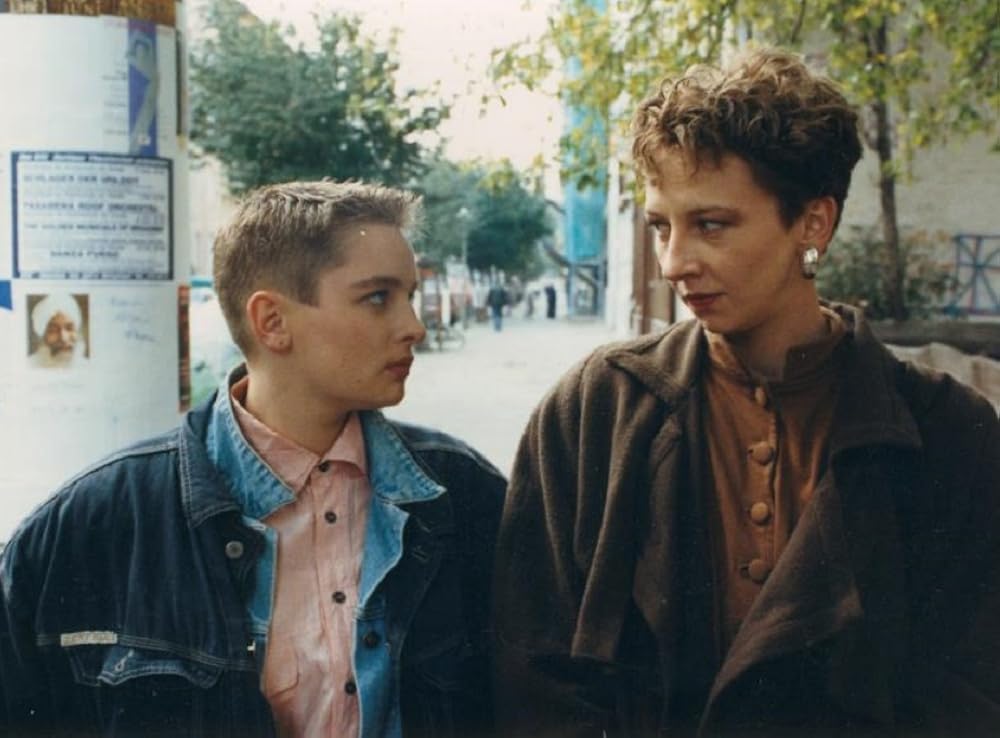
In Auf Raben zu treffen, Barbara Teufel stages a love story between Frederick the Great and Voltaire as a playful dance of the Enlightenment, while Angelika Levi’s Sexparty (Sex Party) presents the sensuous fragment of a lost lesbian film. The pan of Überwachungskamera (Security Camera) in the social spot for MANEO hints at the dystopia that Carlos Pereira sketches out elegantly in a cinematic no-man’s‑lands in his enigmatic art film Slimane. Elke Götz’s Mein ist Dein ganzes Herz (Your Heart Is All Mine) follows the fantastical life of a lesbian office worker who has to choose between a baroque role-play with her mother and her love for a female butcher.
Auf Raben zu treffen
(Meeting Ravens)
Director: Barbara Teufel · Germany 1990 · 16mm · 4 min · German · no subtitles
Sexparty
(Sex Party)
Director: Angelika Levi · West Germany 1987 · Super 8 · 10 min · no dialogue
Überwachungskamera
(Security Camera)
Director: Christoph Heller · Germany 2006 · 35mm · 1 min · no dialogue
Slimane
Director: Carlos Pereira · Germany 2023 · DCP · 19 min · German with English subtitles
Mein ist Dein ganzes Herz
(Your Heart Is All Mine)
Director: Elke Götz · Germany 1992 · digital · 50 min · German with English subtitles
Curated by Toby Ashraf and Sophie Holzberger
Guests: Barbara Teufel, Angelika Levi, Carlos Pereira, Elke Götz, and others