Thu, 12.11.2026, 01:00 – Fri, 13.11.2026, 01:00
Deutsche Kinemathek
Mauerstraße 79, 10117 Berlin
Filmprogramme at the Deutsche Kinemathek
Film series: feminist migrant queer | legacies presents futures
60 Years of DFFB: For the anniversary, a film series explores the connections between the academy’s past and present. Three spotlights – feminist, migrant, queer – fall on perspectives that still have to fight for visibility: women who campaigned for equality, students with migrant and international biographies, and a queer cinema that is renegotiating its own term.
Thu Nov 12, 8:00 pm — Queer Journeys
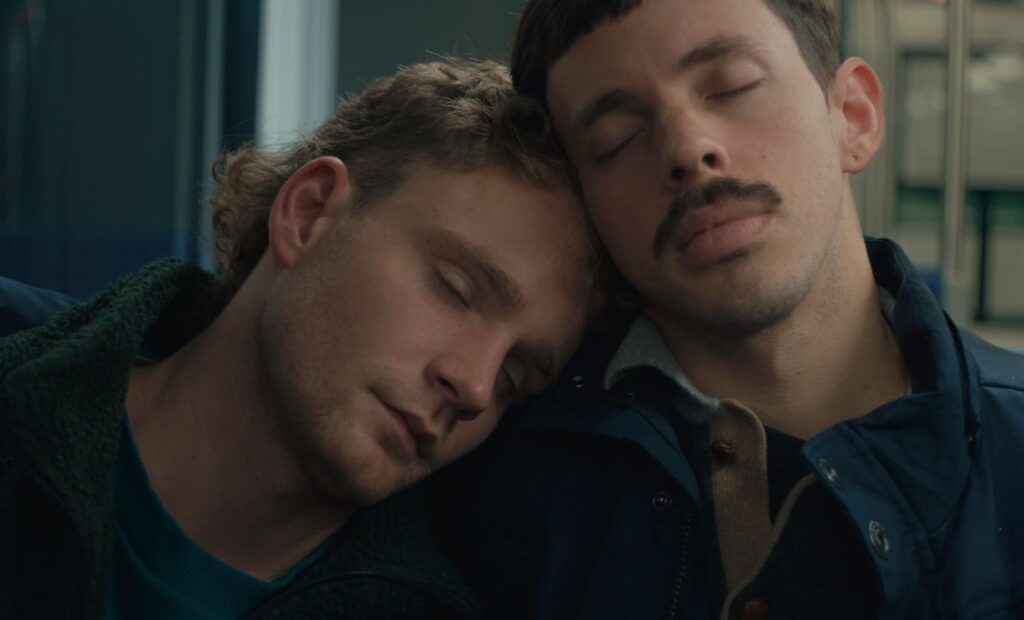
As part of the film series feminist migrant queer | legacies presents futures, the DFFB presents a selection of queer films from the film school’s past 60 years in three programs at the Deutsche Kinemathek, Sinema Transtopia, and Kino Arsenal.
Flat Desires
Director: Senem Göcmen · Germany 2017 · DCP · 4 min · silent
Senem Göcmen pulls images out of the endless stream of the internet and the city and renders them ambiguous. She assembles them in an associative and entertaining way — open to new meaning.
XX to XY: Fighting to be Jake
Director: Emily Atef · Germany 2002 · DCP · 21 min · English with German subtitles
Emily Atef’s first film at the DFFB is also her only documentary: the award-winning director (“The Stranger in Me,” “3 Days in Quiberon”) meets the young protagonist Jake in England and accompanies him through his transition. The result is an intimate short portrait shaped by a tender gaze and its protagonist’s openness.
Zärtlichkeiten
(Tendernesses)
Director: Maria Lang · West Germany 1985 · DCP · 29 min · German with English subtitles
Between theater rehearsals and bar nights, Maria Lang takes us into the lesbian subculture of West Berlin, with appearances by DFFB colleagues such as Verena Rudolph and Angelika Levi (as Li Levy). A fiction film with a documentary sensibility about love, leisure, and being together — and a film without men.
Etage X
(Floor X)
Director: Francy Fabritz · Germany 2016 · DCP · 14 min · German with English subtitles
Two women get stuck in a department store elevator. A sensuous lesbian speculation about what can happen out of sight when two strangers make a virtue of necessity; carefully staged and superbly acted.
For Those Who Love, Leave, and Love Again
Director: Paolo Laganà · Germany 2025 · DCP · 18 min · German, English with English subtitles
A young man drifts between the big city and the provinces. Amid sex, dates, and queer community, he searches for his place and always seems to end up at the margins. In austere images, Paolo Laganà sensitively captures a state of suspension between loneliness and belonging.
Preceded by:
Überwachungskamera
(Security Camera)
Director: Christoph Heller · Germany 2006 · 35mm · 1 min · no dialogue
Curated by Toby Ashraf and Sophie Holzberger
Guests: Senem Göcmen, Jake Yearsley, Francy Fabritz, Paolo Laganà, Ute Aurand, Lilly Grote, Angelika Levi, and others
Fri Nov 13, 6:00 pm — Spiralling
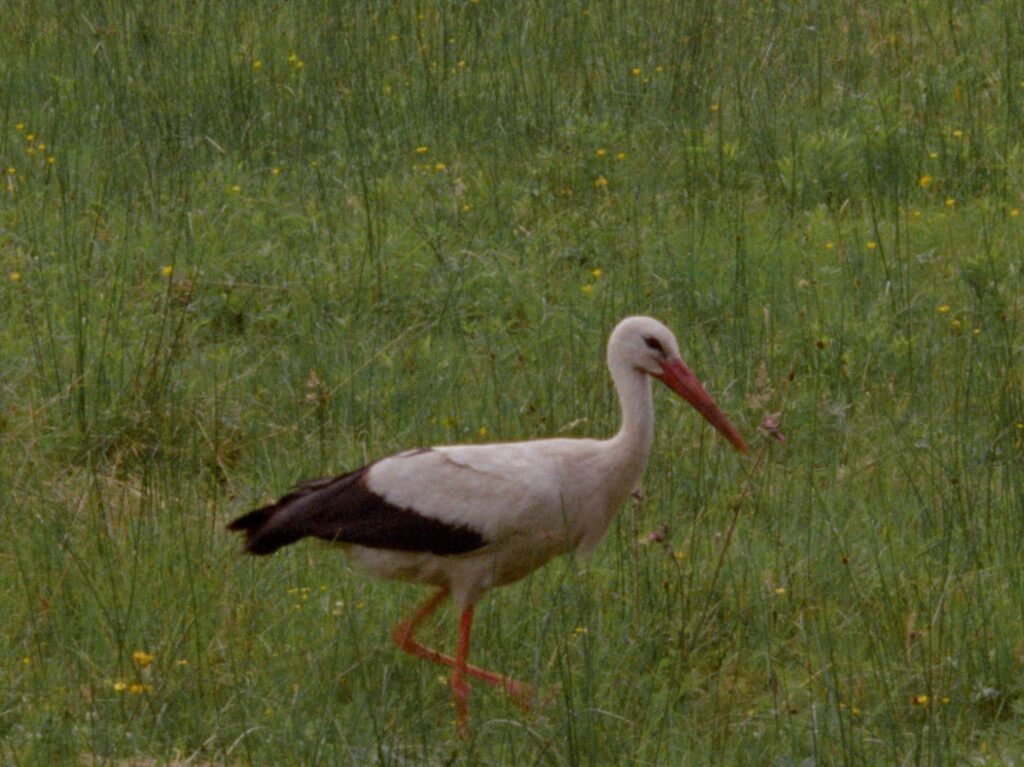
Studying film means grappling with expectations — your own and other people’s, real and imagined — and in the end it is a process of emancipation. The starting point for the program “Spiralling” was the question of how that reckoning shows up in more recent DFFB films: how students’ films take an aesthetic position toward an education in which the promise of professionalization can become an impediment for originality and experiment. Films by Florinda Frisardi, Faraz Fesharaki/Moritz Friese, and Ewelina Rosińska, made between 2017 and 2025 at different stages of their studies, are preceded here by an early film by Raoul Peck, who finds the fulcrum of his critique in language. The artistic range of these films is wide — a width that opens up as long as films are made with the courage to question formal or ideological expectations.
Leugt
Director: Raoul Peck · Sound: Manfred Stahl
West Germany 1983 · DCP · 13 min · German with English subtitles
“Vowels, consonants, pauses, punctuation are merely forming sequences of sounds and non-sounds, from which we, the masses, thanks to centuries of systematic political education are still able to distill intonations and stresses, so that despite ‘not having a clue what the guy has just said or what he’s talking about in the first place’ we are able to applaud when expected.” (Raoul Peck — from a project exposé for Leugt, May 1983)
Reigen
(Round Dance)
Director: Florinda Frisardi · Screenplay: Florinda Frisardi & Felix Schuster · Cinematography: Felix Schuster · Editing: Florinda Frisardi · Sound: Alex Feldman · Cast: Rebecca Lindauer, Tim Lanzinger, Laura Talenti, Vincent Brusdeylins · Production: Florinda Frisardi & Sebastian Ladwig
Germany 2025 · DCP · 6 min · German with English subtitles
A blazing drama of jealousy plays out in an underground parking garage, told in a single continuous shot. Tropes of popular narrative cinema that seem familiar at first are thrown off balance by a narrative loop. A moving-image trompe l’oeil that keeps working on you afterward.
It’s a criminal waste to give this film a postproduction
Direction, screenplay, cinematography, editing: Faraz Fesharaki, Moritz Friese · Sound: Josha Eickel, Jan Pasemann · Music: Rahi Sinaki · Cast: Mitra Kia, Hassan Fesharaki, Tina Kadkhodayan, Sadaf Javdani, Rahi Sinaki, Sohrab Yazdanmehr, Roozbeh Tazhibi, Sara Faezypour · Production: Luise Hauschild, Faraz Fesharaki, Moritz Friese
Germany/Iran 2017 · DCP · 20 min · Farsi, German with English subtitles
On a film set: director Faraz wants to shoot a scene in which he has a video call with his parents. The conversation has barely begun when his father starts questioning the scripted dialogue. The ordinary media setting of the Zoom call sabotages the ambitions of the feature-film production apparatus.
Ashes by name is man
Director: Ewelina Rosińska · Sound mix: Jan Pasemann · Cast: Janina Mokrzycka, Władysław Mokrzycki · Production: Roxana Richters, Ewelina Rosińska
Germany 2023 · shot on 16mm, DCP · 20 min · no dialogue
Ewelina Rosińska shot her graduation film on a 16mm camera in the cultural landscapes around Kraków and Lviv, portraying her grandparents’ everyday life and, with it, a rural way of living shaped by Catholicism. “In the writings of my favorite painter I read that, for him, the Polish landscape seems to draw the gaze constantly downward, leading us to look not past the horizon but beneath our feet, at the bones buried under every step.” (Ewelina Rosińska)
Curated by Karina Griffith and Tobias Hering
Guests: Florinda Frisardi, Sebastian Ladwig, Faraz Fesharaki [tbc], Moritz Friese, Ewelina Rosińska
Fri Nov 13, 8:30 pm — Health and Happiness
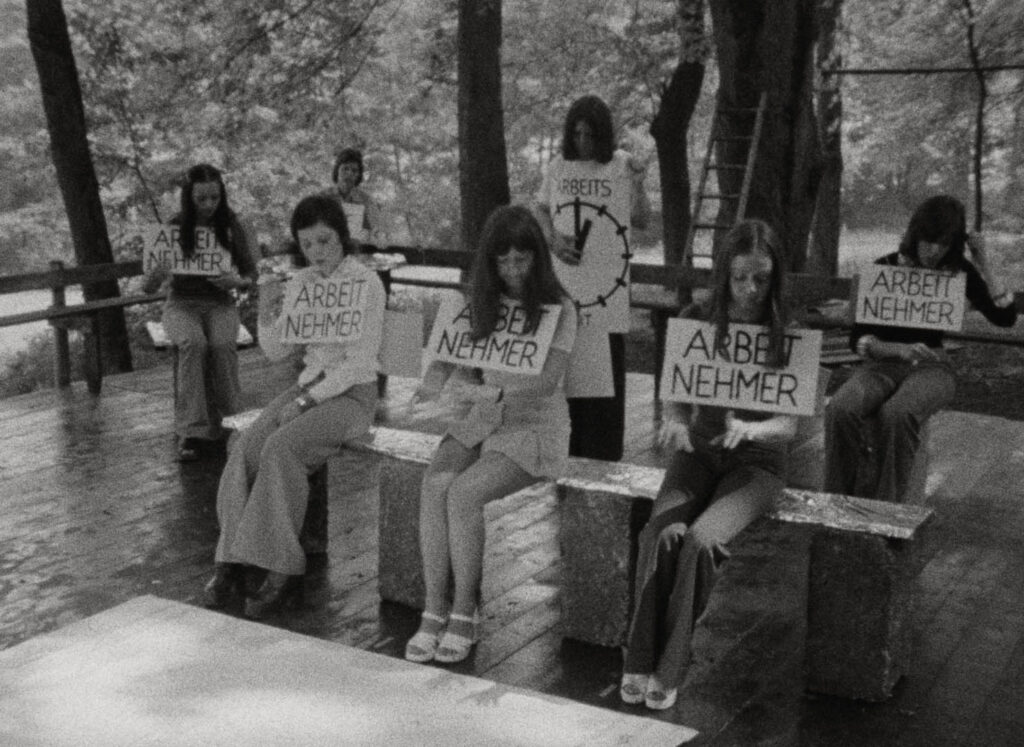
The films are connected by questions of what role community plays within a capitalist-patriarchal order, and how change, happiness, or health are possible at all. In Helfen können wir uns nur selbst (We Can Only Help Ourselves, 1974), Gardi Deppe accompanies eight young women in the West German Kur clinic Auental (a residential health-cure facility). The director stages a role-play with them in which they express their experiences of exploitation and identify them as the result of structural conditions. Conversations with doctors eventually reveal that the cure is less invested in healing patients than in reintegrating them into working life and the family. Gardi Deppe was part of the Wochenschau group at the DFFB. The film premiered at the Oberhausen Short Film Festival. In Die fünfblättrige Fliederblüte (The Five-Petaled Lilac Blossom, 1993), Yingli Ma visits her hometown of Beijing to meet four friends from her school days. In conversations about their work and private lives, the film draws a picture of China after the crushed democracy movement of 1989 and before the economic opening to the West. The young adults describe mounting pressure to perform, while the lucky image of the blossom becomes a sign of hope and a symbol of their friendship. Yingli Ma took up her studies at DFFB in 1988. Her work as a filmmaker, producer, and screenwriter engages with processes of social transformation and how they affect the individual.
Helfen können wir uns nur selbst
(We Can Only Help Ourselves)
Director: Gardi Deppe · West Germany 1974 · DCP · 48 min · German with English subtitles
Die fünfblättrige Fliederblüte
(The Five-Petaled Lilac Blossom)
Director: Yingli Ma · Germany 1993 · DCP · 30 min · German, Mandarin with German subtitles
Curated by Fiona Berg, Sophie Holzberger and Arisa Purkpong